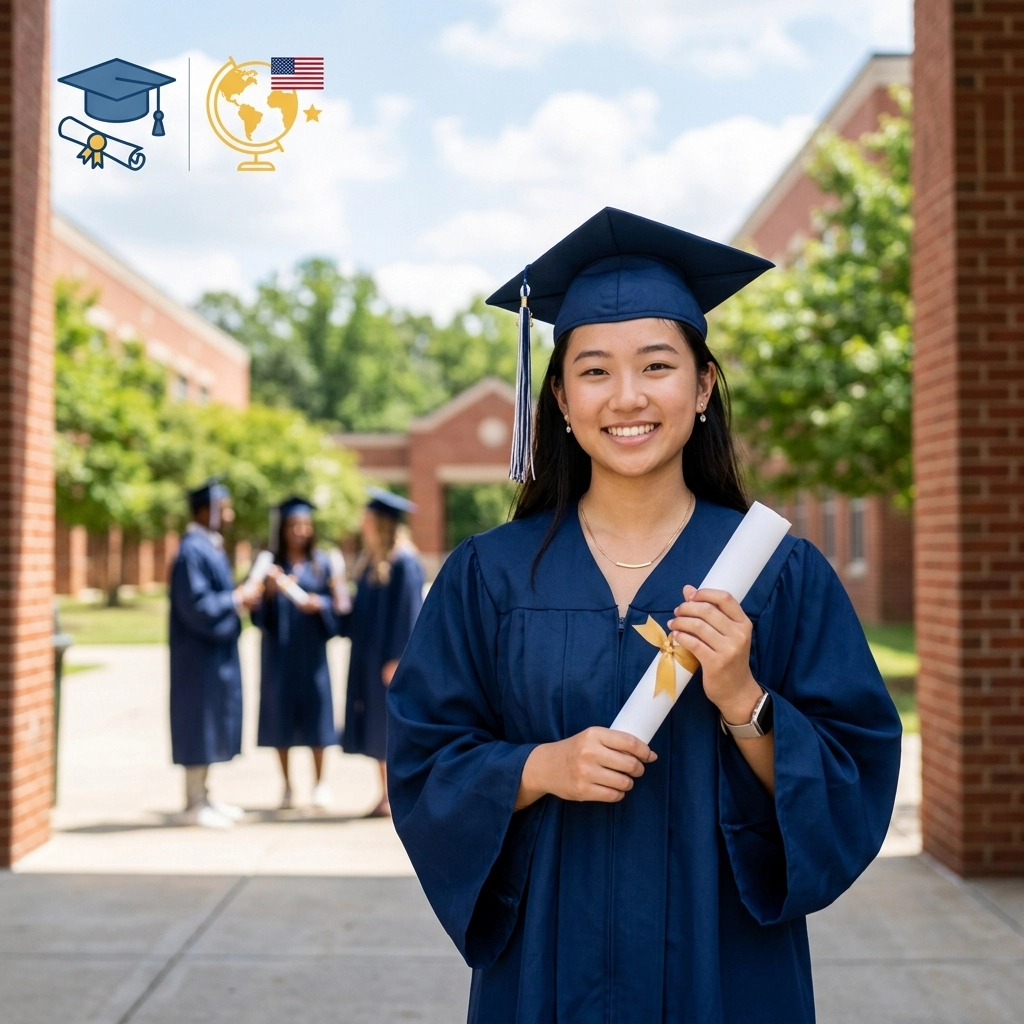
The Ultimate Guide to US High School Diploma for International Students: Everything You Need to Succeed
Location: New York, NY / Monrovia, Liberia
The Ultimate Guide to US High School Diploma for International Students serves as a foundational resource for learners seeking to navigate the complexities of American secondary education from abroad. This document outlines the regulatory requirements, academic structures, and enrollment procedures necessary for global learners to obtain a credential that is recognized by higher education institutions worldwide.
Defining the American Secondary Credential
A US High School Diploma is an officially recognized certificate awarded to students who successfully complete the secondary education requirements of a United States-based educational institution. For those residing outside the United States, this credential is often pursued through accredited online platforms that provide a curriculum equivalent to that of domestic American schools.
International students utilize this pathway to demonstrate academic readiness for North American universities. This guide, The Ultimate Guide to US High School Diploma for International Students, examines how these programs bridge the gap between regional education systems and international standards.
Eligibility and Enrollment Requirements
To begin the process of obtaining a US diploma, candidates must meet specific eligibility criteria established by accredited providers. These requirements ensure that the student possesses the foundational knowledge necessary to succeed in a rigorous English-language academic environment.
- Age Requirements: Applicants are generally required to be at least 14 years of age.
- Prior Education: Completion of the equivalent of the American 8th-grade level is a standard prerequisite.
- English Proficiency: Students must demonstrate a functional command of the English language to engage with the curriculum effectively.
- Documentation: Submission of official transcripts from previous secondary schools is mandatory for credit evaluation.
Establishing eligibility is the first step in The Ultimate Guide to US High School Diploma for International Students. Once these criteria are met, students can proceed to select a program that offers a fast-track US diploma option or a traditional multi-year track.
Academic Structure and Credit Systems
The American high school system operates on a credit-based model where students earn units for each subject completed. A standard diploma typically requires the accumulation of 20 to 24 credits across various disciplines.
| Subject Area | Typical Credit Requirement |
|---|---|
| English Language Arts | 4.0 Credits |
| Mathematics | 3.0 – 4.0 Credits |
| Science | 3.0 Credits |
| Social Studies | 3.0 Credits |
| Electives | 4.0 – 6.0 Credits |
| World Languages | 2.0 Credits |
This structured approach allows for an academic performance comparison between the student's previous local curriculum and the American standard. By aligning their studies with these requirements, students ensure their profile meets the expectations of university admissions officers.

The Role of Transfer Credits
One of the most efficient aspects of pursuing a US credential from abroad is the ability to transfer existing academic credits. Most accredited programs allow students to transfer up to 75% of the total required credits from their local high school records.
The Ultimate Guide to US High School Diploma for International Students highlights that a minimum number of credits: usually six: must be completed directly with the US institution to qualify for the diploma. This policy ensures that the issuing school can verify the student's mastery of the American curriculum standards.
Academic advisors at Educlive assist students in this credit evaluation process to maximize prior learning. You can learn more about our organizational mission at https://educlive.org/.
Language Proficiency and Online ESL Classes
For many international applicants, the primary barrier to entry is the language of instruction. To address this, many accredited pathways integrate online esl classes into the core curriculum. These sessions focus on academic English, which differs significantly from conversational language skills.
- Vocabulary Expansion: Learning technical terms used in science, mathematics, and literature.
- Academic Writing: Mastering the structure of essays, research papers, and formal reports.
- Reading Comprehension: Analyzing complex texts to extract critical data and arguments.
Integrating online esl classes ensures that students do not fall behind in their core subjects while they refine their linguistic abilities. This dual-focus approach is a key component of The Ultimate Guide to US High School Diploma for International Students.
Identifying a Fast-Track US Diploma Pathway
A fast-track US diploma is an accelerated academic program designed for students who have already completed a significant portion of their secondary education in their home country. This pathway focuses on fulfilling the remaining US-specific requirements in a condensed timeframe, often ranging from six to eighteen months.
These programs are particularly beneficial for students in the final years of their local high school who wish to enter a US university immediately after graduation. By focusing only on the necessary gap courses, students can achieve their goals without redundant study.

Academic Performance Comparison and Global Standards
When applying to global universities, the academic performance comparison is a critical metric used by admissions boards. This comparison evaluates how a student’s grades in their home country relate to the American Grade Point Average (GPA) system.
The Ultimate Guide to US High School Diploma for International Students emphasizes that holding an American diploma simplifies this process. Because the credential is already in the US format, universities can more easily assess the student's rank and rigor compared to other applicants.
This transparency often leads to higher acceptance rates at competitive institutions. Educlive provides resources to help students understand these metrics through our blog.
Navigating the Virtual Learning Environment
The transition to a digital classroom requires a specific set of soft skills and technical competencies. International students must be prepared to manage their time effectively and engage with instructors through various digital mediums.
- Asynchronous Learning: Completing assignments and reviewing lectures at the student's own pace.
- Synchronous Sessions: Participating in live virtual classes for real-time interaction.
- Technical Literacy: Utilizing Learning Management Systems (LMS) to submit work and track progress.
Educlive offers specialized support for these transitions. For instance, our soft skills portfolio provides insights into the self-management needed for online academic success.

Benefits of the Dual Diploma Option
Many students choose to pursue a "Dual Diploma," which allows them to earn their local high school credential and the US diploma simultaneously. This dual-enrollment strategy provides a comprehensive safety net and doubles the student's post-secondary opportunities.
The Ultimate Guide to US High School Diploma for International Students identifies the dual diploma as a premier choice for ambitious learners. It demonstrates a high level of academic stamina and the ability to handle diverse curricula, which are traits highly valued by elite universities.
This pathway also mitigates the risk associated with international travel and visa applications, as the coursework is completed remotely. For more information on how we are expanding these opportunities, visit Educlive's expansion plan for West Africa.
Procedural Steps to Graduation
The journey toward graduation involves several milestones that must be carefully managed. Following the steps in The Ultimate Guide to US High School Diploma for International Students ensures that no critical requirements are overlooked.
- Initial Consultation: Discussing academic goals and reviewing previous transcripts.
- Course Selection: Identifying the specific credits needed to meet US graduation standards.
- Active Study: Engaging with the curriculum, including any necessary online esl classes.
- Final Assessments: Completing capstone projects or final examinations required for each course.
- Diploma Issuance: Receiving the accredited certificate upon verification of all credit requirements.
Each step is monitored by academic advisors to ensure the student remains on track for their intended university start date.

Final Outlook and Academic Transformation
The pursuit of an American secondary credential represents a significant academic transformation for international students. By following The Ultimate Guide to US High School Diploma for International Students, learners can effectively transition from local systems to a global standard of education.
The availability of a fast-track US diploma and the integration of online esl classes have made this pathway more accessible than ever before. This credential serves not only as a certificate of completion but as a gateway to international higher education and professional opportunities.
Educlive remains committed to providing the resources and support necessary for this journey. We encourage students and parents to explore our full portfolio of services to begin their academic transformation today. The path to global success is structured, attainable, and starts with the right guidance.