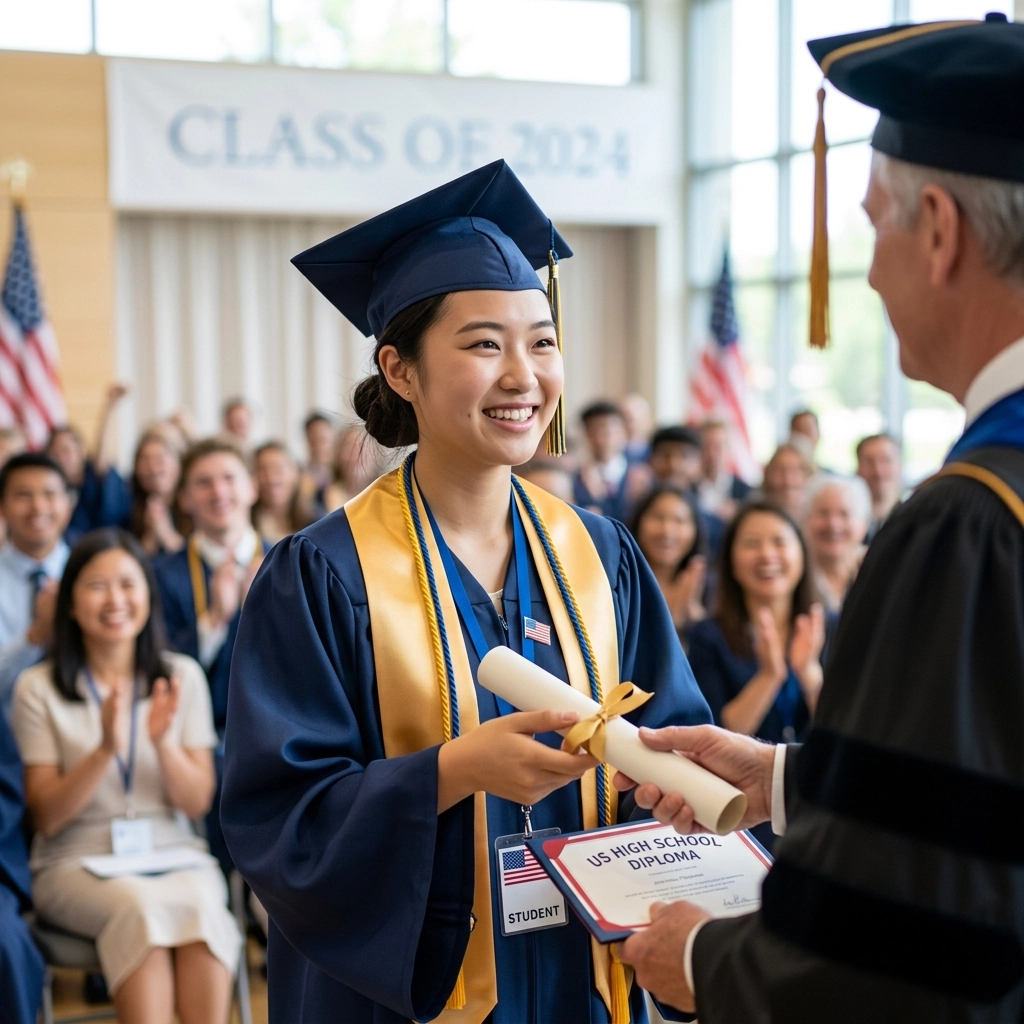
The Ultimate Guide to a US High School Diploma for International Students: Everything You Need to Succeed
Monrovia, Liberia | New York, USA – May 12, 2026
Defining the U.S. Secondary Education Credential
A U.S. high school diploma is a globally recognized academic credential awarded to students who successfully complete the secondary education requirements established by American educational authorities. For international learners, this document serves as a critical bridge to higher education in the United States and other Western institutions. The Ultimate Guide to a US High School Diploma for International Students provides a structured overview of how students outside the U.S. can attain this qualification through digital platforms.
International students increasingly seek this diploma to align their academic profiles with global standards. By earning this credential, students demonstrate their ability to navigate a curriculum focused on critical thinking, comprehensive analysis, and English language mastery. Educlive facilitates this transition through specialized programs designed to meet the rigorous standards of U.S. accreditation.
Advantages of the U.S. Academic Pathway
The pursuit of an American secondary education offers several strategic advantages for students aiming for global mobility. Primarily, it simplifies the university application process by providing a transcript that admissions officers in the U.S. and Europe immediately recognize. The Ultimate Guide to a US High School Diploma for International Students highlights that this path often eliminates the need for complex credential evaluations.
Furthermore, students who hold an American diploma are often viewed as more prepared for the rigors of Western university life. The curriculum emphasizes independent research and collaborative projects, which are hallmarks of higher education. This preparation reduces the academic shock many international students experience during their first year of college.
Academic Performance Comparison: Local vs. U.S. Standards
When evaluating educational options, a thorough academic performance comparison is essential for determining the best fit for a student’s career goals. Local curricula, such as the WASSCE in West Africa, often focus heavily on high-stakes summative examinations. In contrast, the U.S. system utilizes a continuous assessment model that tracks progress over several years.

The U.S. model awards credits for individual subjects, allowing for a more diverse range of electives. This flexibility enables students to specialize in areas such as technology, business, or the arts while completing core requirements in mathematics and science. Understanding these differences is a core component of The Ultimate Guide to a US High School Diploma for International Students.
- U.S. Model: Focused on GPA (Grade Point Average) and continuous credit accumulation.
- International Models: Often focused on one final set of national examinations.
- Assessment Style: U.S. diplomas prioritize quizzes, projects, and participation alongside exams.
Requirements and Eligibility for International Enrollment
To begin the journey toward a U.S. diploma, students must meet specific eligibility criteria regarding their previous academic records and language proficiency. Most accredited programs require a formal review of transcripts from the student’s home country. The Ultimate Guide to a US High School Diploma for International Students emphasizes that students can often transfer existing credits to shorten their time to graduation.
General admission requirements typically include proof of age, residency, and a demonstrated level of English proficiency. Students who have not yet reached the required English level may need to enroll in preparatory courses. Educlive ensures that every applicant is evaluated fairly to determine their optimal starting point in the curriculum.

Implementing a Fast-Track US Diploma
For students who are already advanced in their local studies or who have experienced delays in their education, a fast-track US diploma offers an efficient solution. This accelerated model allows learners to complete credit requirements in a condensed timeframe without compromising academic integrity. The Ultimate Guide to a US High School Diploma for International Students identifies this as a primary choice for high-achieving individuals.
The accelerated high school diploma focuses on core competencies required for graduation. By utilizing asynchronous learning platforms, students can progress through material as quickly as they master the concepts. This model is particularly effective for those transitioning from the WASSCE to U.S. university requirements.
Key Components of Accelerated Programs:
- Intensive Course Modules: Focused study on essential subject matter.
- Competency-Based Assessment: Credits awarded based on mastery rather than seat time.
- Year-Round Enrollment: The ability to start at any time during the academic year.
The Essential Role of Online ESL Classes
Language proficiency is the foundation of success in any American academic program. For many international students, online esl classes provide the necessary linguistic support to excel in subjects like American Literature and U.S. History. The Ultimate Guide to a US High School Diploma for International Students notes that these classes are often integrated into the diploma program.

These English as a Second Language modules focus on academic vocabulary and writing styles specific to U.S. education. By participating in online esl classes, students improve their ability to communicate complex ideas effectively. This linguistic foundation is vital for achieving a competitive GPA and performing well on standardized tests.
Verification and Accreditation Standards
Accreditation is the most critical factor to consider when choosing a diploma program. An unaccredited diploma will not be recognized by universities or employers, rendering the student's effort and investment invalid. The Ultimate Guide to a US High School Diploma for International Students serves as a reminder to always verify the status of accreditation partners.
A legitimate U.S. diploma must be issued by an institution recognized by regional accrediting bodies in the United States. These bodies ensure that the school maintains high standards for curriculum, teacher qualifications, and student support. Educlive partners with accredited institutions to ensure that every U.S. high school diploma program offered meets these stringent requirements.
Navigating the Transfer Credit Process
Many students do not start their U.S. diploma from the ninth grade. Instead, they transfer from their local school system during their tenth or eleventh-grade year. The Ultimate Guide to a US High School Diploma for International Students outlines the process of converting local grades into U.S. credits. This process is essential for students pursuing WASSCE U.S. high school diploma pathways.
The transfer process involves a course-by-course evaluation. A mathematics course taken in a Nigerian or Liberian secondary school, for example, is compared to the U.S. equivalent to determine credit eligibility. This ensures that students receive credit for work already completed and do not repeat unnecessary coursework.
Financial and Practical Planning for Success
The cost of obtaining a U.S. diploma can vary significantly based on the program and the level of support required. Students and their families must plan for tuition, digital resources, and potential examination fees. The Ultimate Guide to a US High School Diploma for International Students encourages families to view this as a long-term investment in the student’s professional future.
Practically, students must also ensure they have the necessary technology to succeed in an online environment. A reliable internet connection and a dedicated workspace are mandatory for maintaining the focus required for academic excellence. Educlive provides guidance on managing these practicalities through our academic support services.

Conclusion: Securing Your Global Future
Earning a U.S. high school diploma is a transformative step for any international student. It provides the academic foundation, language skills, and recognized credentials necessary to compete on a global stage. The Ultimate Guide to a US High School Diploma for International Students has detailed the pathways, from a fast-track US diploma to the necessity of online esl classes, that lead to graduation success.
By understanding the academic performance comparison between local and international systems, students can make informed decisions about their education. Educlive remains committed to providing the resources and accredited programs needed to bridge the gap between local secondary education and global university admission.
To begin your academic transformation and learn more about our specific diploma tracks, please visit our U.S. High School Diploma Program page or contact our admissions team today for a personalized evaluation.