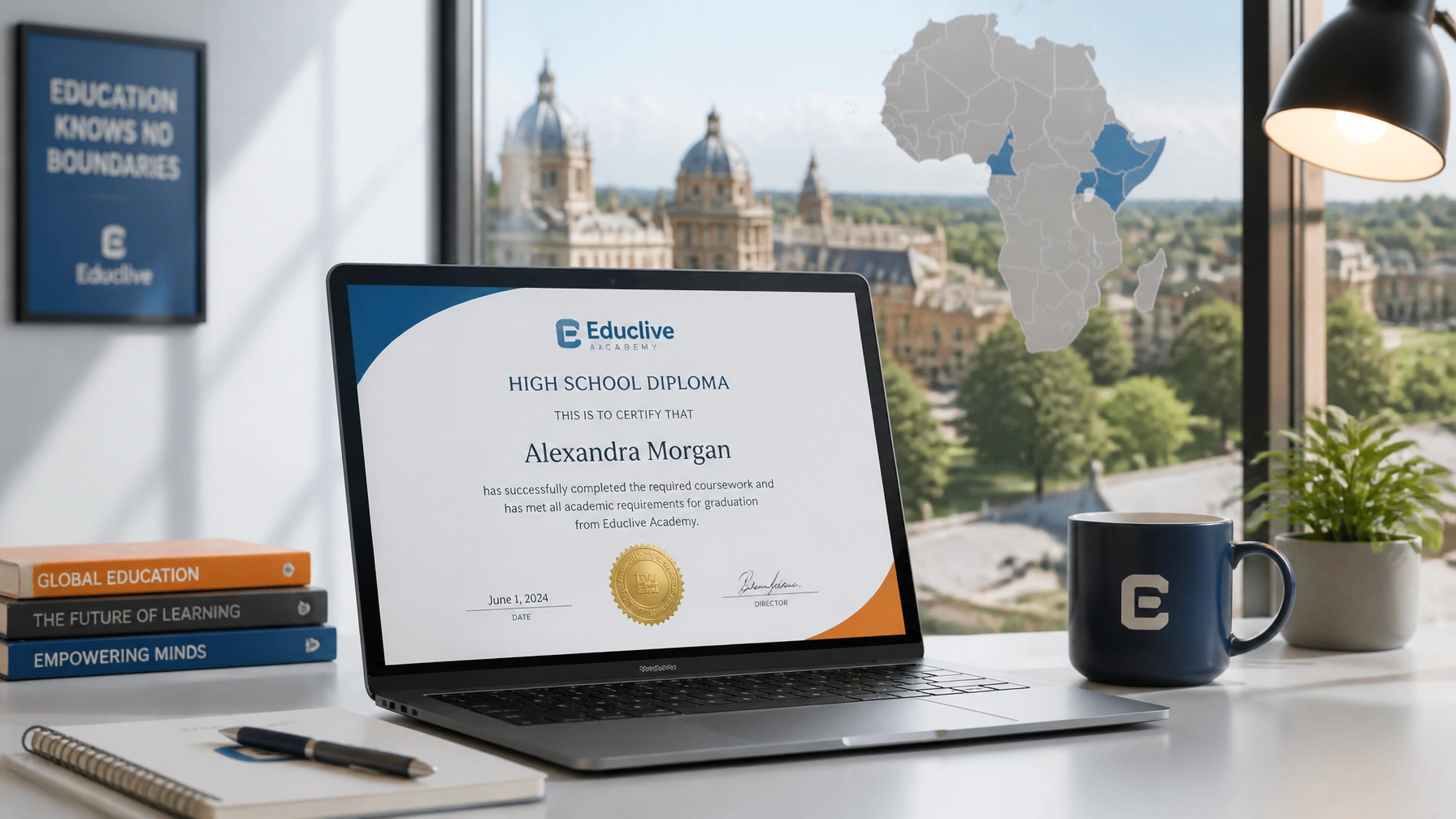
5 Steps How to Use a Virtual High School and Win U.S. College Scholarships
Across the African continent, ambitious students and their parents are increasingly seeking a competitive edge in the global academic landscape. The transition from local secondary curricula to the requirements of prestigious United States universities can often present a significant gap in documentation and academic alignment. A virtual high school serves as a premium academic bridge, allowing students to earn a regionally accredited U.S. High School Diploma entirely online, without the need for relocation or physical attendance.
This digital pathway is specifically designed to facilitate "visa-proofing" by establishing a robust academic record that U.S. admissions officers and scholarship committees recognize instantly. By following a structured roadmap, African learners can leverage a virtual high school to secure substantial financial aid and merit-based scholarships at top-tier institutions, including the Ivy League.
Step 1: Enrollment in a Regionally Accredited Digital Program
The first requirement for any student seeking a U.S. college scholarship is the possession of a recognized secondary school credential. In a virtual high school, this takes the form of a transcript and diploma that carry regional accreditation, such as that provided by Cognia or similar bodies. This accreditation ensures that the coursework meets the same rigorous standards as elite physical schools in the United States.
Choosing a virtual high school allows students to bypass the limitations of local examination boards that may not be fully understood by international admissions offices. The digital platform provides a standardized GPA (Grade Point Average), which is the primary metric used by scholarship committees to assess academic eligibility and potential.
- Verify that the virtual high school offers a standard 22-to-26 credit diploma.
- Ensure the program provides a dedicated school profile to explain the student's background to universities.
- Confirm that the institution offers direct counselor support for the Common Application and other scholarship portals.
Step 2: Maintaining Academic Rigor Through Advanced Coursework
To win competitive scholarships, a student must demonstrate academic excellence and a willingness to pursue the most challenging curriculum available. Within a virtual high school, this is achieved by enrolling in Honors and Advanced Placement (AP) courses. These courses are weighted more heavily in GPA calculations and signal to universities that the student is prepared for high-level research and study.
Scholarship providers often look for "student athlete eligibility" standards or high academic benchmarks when awarding merit-based funds. A virtual high school provides the flexibility to balance these demanding courses with personal development, ensuring the student maintains a superior academic standing.

Step 3: Strategic Portfolio Development and Leadership
Academic scores alone are rarely sufficient to secure full-ride scholarships at premier universities. Students must utilize the flexibility of a virtual high school to build a pan-African leadership portfolio. Because the student is not bound by a physical classroom schedule, they have more time to initiate community impact projects, lead digital organizations, or engage in high-level internships.
The virtual high school model encourages self-discipline and digital literacy, both of which are highly valued by scholarship committees. When a student can demonstrate how they managed a full U.S. curriculum while simultaneously leading a local NGO or research project, they become a high-priority candidate for institutional aid.
- Demonstrate leadership by founding a local or continental interest group.
- Pursue internships in fields related to the intended university major.
- Engage in community service that addresses specific African development goals.
Step 4: Navigating Institutional Financial Aid for International Students
Most significant scholarships for African students are "institutional," meaning they are provided directly by the university rather than external foundations. A virtual high school provides the specific documentation, such as a U.S.-style transcript, that allows financial aid offices to evaluate an African student alongside their American peers. This "Academic Bridge" eliminates the ambiguity often associated with converting varied African grading systems.
By graduating from a virtual high school, students can often bypass the need for costly "foundation years" or "bridge programs" that many universities require of international students. This direct admission eligibility is a critical factor in being considered for "need-blind" or "merit-based" full-tuition awards.

Step 5: Achieving Virtual Global Mobility and Visa-Proofing
The final step in the roadmap is the strategic application process. A virtual high school prepares the student for the logistical requirements of international higher education. By completing a purely digital journey from enrollment to graduation, the student demonstrates a high level of "virtual global mobility." This experience is instrumental during the visa interview process, as it proves a long-standing commitment to the U.S. educational system.
Securing a scholarship requires meticulous attention to deadlines and requirements. The digital nature of a virtual high school ensures that all academic records are readily accessible and can be transmitted to any university in the world at the click of a button. This efficiency is vital when applying for early decision programs or exclusive scholarship rounds.

Conclusion
The path to a U.S. college scholarship is a journey of strategic alignment and academic excellence. By utilizing a virtual high school, students across Africa can transform their educational trajectory and access opportunities that were previously out of reach. This 100% online pathway offers the flexibility, rigor, and international recognition necessary to compete for the world's most prestigious academic awards.
Educlive is dedicated to providing the resources and professional consulting necessary for students to navigate this Pan-African roadmap. If you are ready to begin your transformation and secure your place at a top-tier U.S. university, we invite you to explore our accelerated programs.
Best,
Edem G. Tetteh, Ph.D.
CEO, Educlive
www.educlive.org
Whatsapp: (304) 421-1962