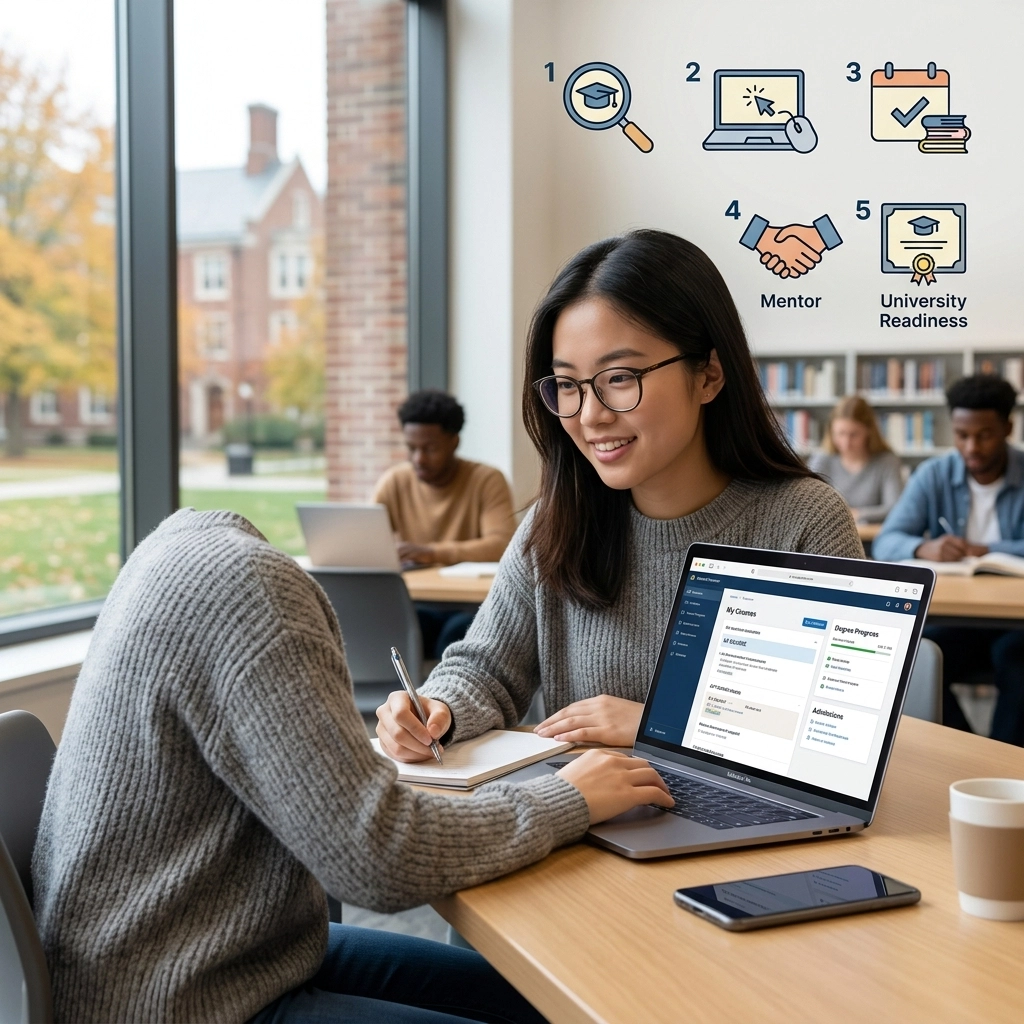
5 Steps How to Navigate US High School Programs Online and Achieve University Readiness (Easy Guide for International Students)
New York, USA | April 25, 2026
The pursuit of a United States high school diploma from an international location has become a primary pathway for students seeking entry into global universities. For many, the transition from local curricula to a US-based system requires a clear understanding of accreditation, credit transfers, and academic expectations. This guide outlines the 5 Steps How to Navigate US High School Programs Online and Achieve University Readiness to ensure students from diverse backgrounds can successfully bridge the gap to higher education.
University readiness refers to the set of skills, knowledge, and behaviors a high school student should possess upon graduation to succeed in a college environment. For international students, this readiness is often validated by a US high school diploma, which demonstrates a student's ability to handle rigorous coursework delivered in English. By following a structured approach, students can achieve this milestone through flexible online platforms.
Step 1: Research and Select an Accredited Online Program
The first requirement in the 5 Steps How to Navigate US High School Programs Online and Achieve University Readiness is identifying a school that holds recognized accreditation. Accreditation is the process of external review that ensures an educational institution meets specific standards of quality and rigor. For students looking into online high school Africa options, it is essential to verify that the institution is accredited by regional bodies such as Cognia or the Middle States Association.
Selecting the right program involves more than checking for accreditation; students must also examine the curriculum's depth. A robust program should offer a variety of subjects, including Advanced Placement (AP) courses or honors tracks, which are highly valued by university admissions officers. These courses allow students to demonstrate their ability to perform at a college level while still in high school.

When researching, international students should consider the following factors:
- The availability of specialized tracks like STEM or humanities.
- The level of technical support provided to students in different time zones.
- The school's history of placing international graduates into reputable universities.
- The cost of tuition and any additional fees for international transcript evaluation.
Step 2: Ensure Foreign Education Alignment and Transcript Evaluation
The second stage of the 5 Steps How to Navigate US High School Programs Online and Achieve University Readiness involves the formal assessment of a student’s previous academic record. Foreign education alignment is the process of comparing non-US educational credits with the US credit system to determine how many credits can be transferred toward a diploma. This ensures that students do not repeat coursework they have already mastered in their home countries.
Most US online programs require an official transcript evaluation conducted by an approved agency. This evaluation converts grades and course titles into a format that US registrars can interpret accurately. Students must ensure that their previous school provides stamped, official documents to facilitate this process.
Understanding the Credit Transfer Process
To maximize the benefits of a US online program, students should understand the following components of transcript evaluation:
- Credit Equivalence: Determining how many US "Carnegie Units" correspond to local high school hours.
- Grade Conversion: Mapping local grading scales (e.g., percentages or 1-10 scales) to the US 4.0 GPA scale.
- Subject Mapping: Ensuring that core subjects like Mathematics, Science, and English meet the specific graduation requirements of the US state where the school is registered.
Step 3: Establish a Productive Digital Learning Environment
The third phase in the 5 Steps How to Navigate US High School Programs Online and Achieve University Readiness focuses on the physical and technical infrastructure required for remote study. Online learning demands a high degree of self-discipline and a reliable technological setup. Without a dedicated space and the necessary tools, students may find it difficult to maintain the pace required for university preparation.
A stable internet connection is the most critical requirement for accessing synchronous lectures and asynchronous course materials. Students should also familiarize themselves with the Learning Management System (LMS) used by the school, such as Canvas or Blackboard. Mastering these tools early allows the student to focus on academic content rather than technical troubleshooting.

Effective digital learning also requires the following:
- A quiet, distraction-free study zone dedicated exclusively to schoolwork.
- A computer that meets the minimum software requirements for video conferencing and document processing.
- A digital calendar or planner to track assignment deadlines and examination dates.
- A backup plan for internet or power outages, which is particularly relevant for students in developing regions.
Step 4: Utilize Academic Coaching Services for Personalized Growth
The fourth step in the 5 Steps How to Navigate US High School Programs Online and Achieve University Readiness is the integration of personalized support. Academic coaching services provide students with one-on-one guidance to improve study habits, manage time, and master complex subject matter. For international students, these services are vital for navigating the nuances of the US grading system and academic integrity standards.
Educlive emphasizes the importance of personalized instruction through its faculty-detail and instructors pages. By engaging with experienced educators, students can receive feedback that goes beyond simple grading. Coaches help students identify their academic weaknesses and develop strategies to overcome them, ensuring they remain competitive for university admissions.

Key benefits of utilizing professional coaching include:
- Targeted Remediation: Focusing on specific areas where a student may be struggling, such as English composition or advanced calculus.
- Goal Setting: Creating short-term and long-term academic milestones to maintain motivation.
- Standardized Test Prep: Receiving guidance on preparing for the SAT or ACT, which are often required for US university admission.
- College Essay Support: Working with advisors to craft compelling personal statements for university applications.
Step 5: Finalize University Readiness and Application Planning
The final component of the 5 Steps How to Navigate US High School Programs Online and Achieve University Readiness is the strategic planning for the transition to higher education. University readiness is not merely about completing high school credits; it is about demonstrating a comprehensive profile to admissions committees. This includes extracurricular involvement, leadership roles, and a clear understanding of one's intended major.
Students should begin this phase by exploring our-programs and major-program options to align their high school electives with their future career goals. For example, a student interested in engineering should prioritize high-level physics and calculus during their online high school tenure. Early planning ensures that all prerequisites for specific university departments are met well before the application deadline.

To achieve full university readiness, students must complete the following:
- Researching universities that offer the best fit for their academic and personal needs.
- Requesting letters of recommendation from online instructors who can attest to their work ethic and ability.
- Finalizing a high school resume that highlights academic achievements and community involvement.
- Reviewing the enrollment-process for target universities to ensure all deadlines are met.
Navigating the Path to Global Success
The journey from an international high school environment to a US university is a transformative process that requires careful navigation. By following the 5 Steps How to Navigate US High School Programs Online and Achieve University Readiness, students can ensure they are not only earning a diploma but also building the foundational skills necessary for long-term academic success. The flexibility of online learning, combined with the rigor of a US curriculum, provides a unique advantage in the global education market.
Whether a student is pursuing an Accelerated High School Diploma or looking for GED® Exam Mastery, the goal remains the same: preparation for the next stage of life. The alignment of foreign education with US standards opens doors to prestigious institutions and diverse career opportunities that might otherwise be inaccessible.
Educlive is committed to supporting international students through every stage of this academic journey. From initial transcript evaluation to final university placement, our resources are designed to facilitate a seamless transition. For those ready to take the first step toward a global education, we invite you to book a free consultation with our academic advisors to discuss your personalized pathway.
In summary, the 5 Steps How to Navigate US High School Programs Online and Achieve University Readiness provide a comprehensive framework for international academic achievement. By selecting accredited programs, ensuring proper credit alignment, establishing a strong study environment, utilizing academic coaching, and planning strategically for university, students can confidently pursue their educational dreams on a global scale.