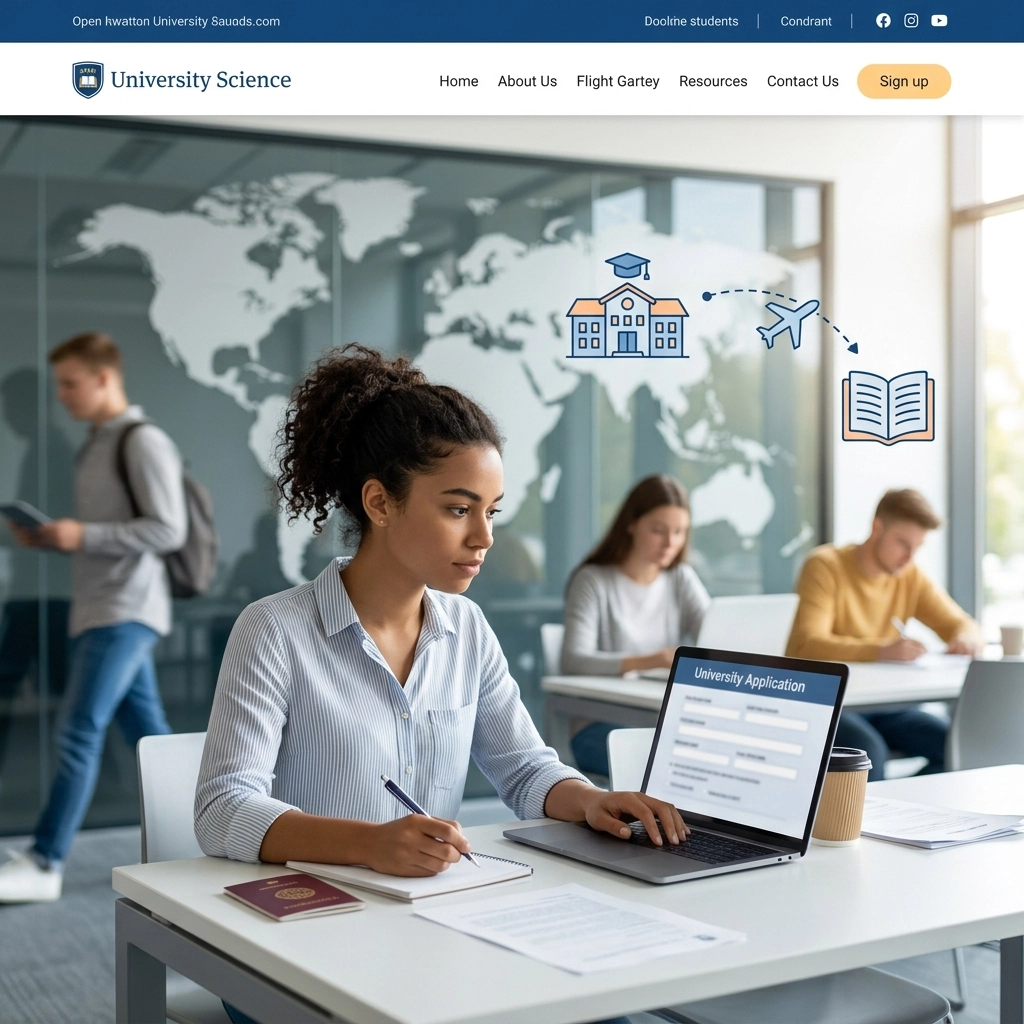
The Ultimate Guide to Global University Access: Everything You Need to Succeed
Location: Global / Monrovia, Liberia
Navigating the complexities of the modern academic landscape requires a strategic approach to global university access. As educational standards become increasingly interconnected, students must understand the specific pathways that lead to international success. This guide provides a comprehensive overview of the requirements and strategies necessary to transition from local curricula to world-class institutions.
The concept of global university access refers to the ability of a student to pursue higher education in a country other than their own, particularly within the United States. This process involves meeting specific academic benchmarks, completing standardized evaluations, and securing the necessary documentation for enrollment. Educlive serves as a bridge for students seeking these opportunities through specialized programs designed for academic transformation.
Establishing a Foundation for Academic Transformation
Academic transformation is the process by which a student enhances their educational credentials to meet international standards. For many, this begins with securing a recognized secondary school qualification that aligns with Western expectations. Achieving global university access is significantly easier when a student possesses a diploma that is widely accepted by admissions officers in the U.S. and Europe.
Students should focus on maintaining a high grade point average (GPA) throughout their secondary education. Consistent performance demonstrates the discipline and intellectual capability required for university-level coursework. Furthermore, engaging with a curriculum that offers rigorous science, technology, engineering, and mathematics (STEM) subjects can improve a candidate's profile during the international student placement process.

Understanding WASSCE to U.S. University Requirements
For students in West Africa, the West African Senior School Certificate Examination (WASSCE) is a critical milestone. However, directly applying to U.S. institutions with these results often requires a deep understanding of WASSCE to U.S. university requirements. Many universities require a supplemental evaluation to determine how these local results compare to the U.S. grading system.
To improve the likelihood of global university access, students often choose to supplement their WASSCE results with an Accelerated High School Diploma. This secondary credential provides a familiar framework for U.S. admissions officers, reducing the friction often associated with international applications. By aligning local achievements with global standards, students can more effectively navigate the competitive landscape of higher education.
The Importance of Transfer Credit Evaluation
A critical component of the transition to international education is the transfer credit evaluation. This is the formal process of reviewing a student’s previous academic work to determine which credits can be applied toward a new degree program. For students who have already completed some college-level coursework or advanced secondary subjects, this evaluation is essential for saving time and reducing tuition costs.
- Official Transcripts: Students must provide original, verified documents from their previous institutions.
- Syllabus Review: In some cases, universities require a detailed course syllabus to ensure content alignment.
- Accreditation Verification: Credits are generally only transferable from institutions that hold recognized accreditation.
- Grade Thresholds: Most institutions require a minimum grade (often a 'C' or higher) for a credit to be considered for transfer.
Successful transfer credit evaluation ensures that students do not have to repeat subjects they have already mastered. This efficiency is a cornerstone of modern global university access, allowing learners to progress toward their professional goals more rapidly. For more information on how credits are managed, visit the Educlive Academics page.
Strategies for International Student Placement
The process of international student placement involves matching a student’s academic profile, career goals, and financial capacity with the right university. This is not a one-size-fits-all procedure; it requires careful research into institutional specializations and campus environments. Securing global university access depends largely on how well a student targets their applications.
Students should consider the location, faculty expertise, and available support services of potential schools. Many U.S. universities offer specialized offices dedicated to supporting international learners, which can be a deciding factor during the international student placement phase. Utilizing professional placement services can help students identify schools where they are most likely to receive both admission and financial aid.

Enhancing Your Profile Through Standardized Testing
Standardized tests remain a significant factor in the pursuit of global university access. While some institutions have moved toward test-optional policies, high scores on exams like the SAT or ACT can still provide a competitive edge. These exams offer a standardized metric that allows admissions officers to compare students from different educational systems fairly.
In addition to academic testing, English language proficiency is a mandatory requirement for most international students. Exams such as the TOEFL or IELTS demonstrate that a student can successfully engage with complex academic material in an English-speaking environment. Strengthening these scores is a vital step for any student serious about their international student placement strategy.
Utilizing the U.S. High School Diploma Program
For many international learners, the most direct route to global university access is through the U.S. High School Diploma Program. This program allows students to earn a diploma that is identical to those received by students studying within the United States. It covers essential subjects and ensures that the student is fully prepared for the rigors of American higher education.
The benefits of this program include:
- Standardized Curriculum: Learning the same material as U.S. peers ensures no gaps in knowledge.
- Simplified Admissions: U.S. universities recognize the diploma immediately, often bypassing complex credential evaluations.
- Flexible Learning: Many of these programs are offered online, allowing students to study from their home country.
- College Readiness: The coursework is designed to develop the critical thinking skills necessary for university success.

Financial Planning for International Education
Financial readiness is a pragmatic aspect of global university access that cannot be overlooked. International education involves costs beyond tuition, including housing, insurance, and travel. Students must demonstrate that they have the financial resources to support their studies before a visa can be issued.
Educlive provides guidance on understanding these costs and identifying scholarship opportunities. Many students utilize sports scholarships as a way to fund their education while pursuing athletic excellence. Planning for payments and understanding the financial commitment is essential for maintaining long-term global university access.
Technical and Vocational Pathways
Not all students require a traditional four-year degree to achieve their career objectives. In many cases, technical diplomas offer a faster and more specialized route into the global workforce. These programs focus on practical skills in fields such as information technology, healthcare, and business administration.
Technical education is an increasingly popular form of global university access because it addresses the immediate needs of the global labor market. By obtaining a technical certificate or diploma that is recognized internationally, students can enter the professional world with specialized expertise. These pathways often allow for a later transfer credit evaluation if the student decides to pursue a full degree in the future.

The Role of Accreditation and Partnerships
When seeking global university access, it is vital to ensure that the educational provider is properly accredited. Accreditation is a seal of quality that guarantees the curriculum meets established standards of excellence. Educlive works with various accreditation partners to ensure that its programs remain valid and respected by higher education institutions worldwide.
Partnering with accredited organizations simplifies the transfer credit evaluation process and provides peace of mind to students and parents alike. Without proper accreditation, the credits earned may not be recognized by other universities, effectively blocking the path to global university access. Always verify the credentials of any educational program before enrollment.
Preparing for the Application Process
The final stages of securing global university access involve the meticulous preparation of application materials. This includes writing a compelling personal statement, obtaining letters of recommendation, and ensuring all transcripts are sent on time. Admissions committees look for students who are not only academically capable but also bring a unique perspective to their campus community.
- Personal Statement: This is your opportunity to tell your story and explain your motivations.
- Letters of Recommendation: Choose educators who can speak specifically to your character and academic potential.
- Resume/CV: Highlight your extracurricular activities, volunteer work, and any internships.
- Deadlines: Adhering to application deadlines is critical; late submissions are rarely considered.
Conclusion: Your Path to Global Success
Achieving global university access is a multifaceted journey that requires dedication, planning, and the right educational partners. By focusing on academic excellence, understanding the nuances of transfer credit evaluation, and strategically approaching international student placement, students can unlock doors to the world's most prestigious universities.
Educlive remains committed to providing the tools and support necessary for this transformation. Whether through a U.S. High School Diploma or specialized exam mastery, the path to international success is within reach. We encourage all aspiring scholars to take the first step toward their future by exploring our programs and contacting our admissions team.

The landscape of education is constantly evolving, but the value of a global perspective remains constant. With the right preparation, global university access is not just a possibility: it is a reality that can redefine your professional and personal life for years to come.