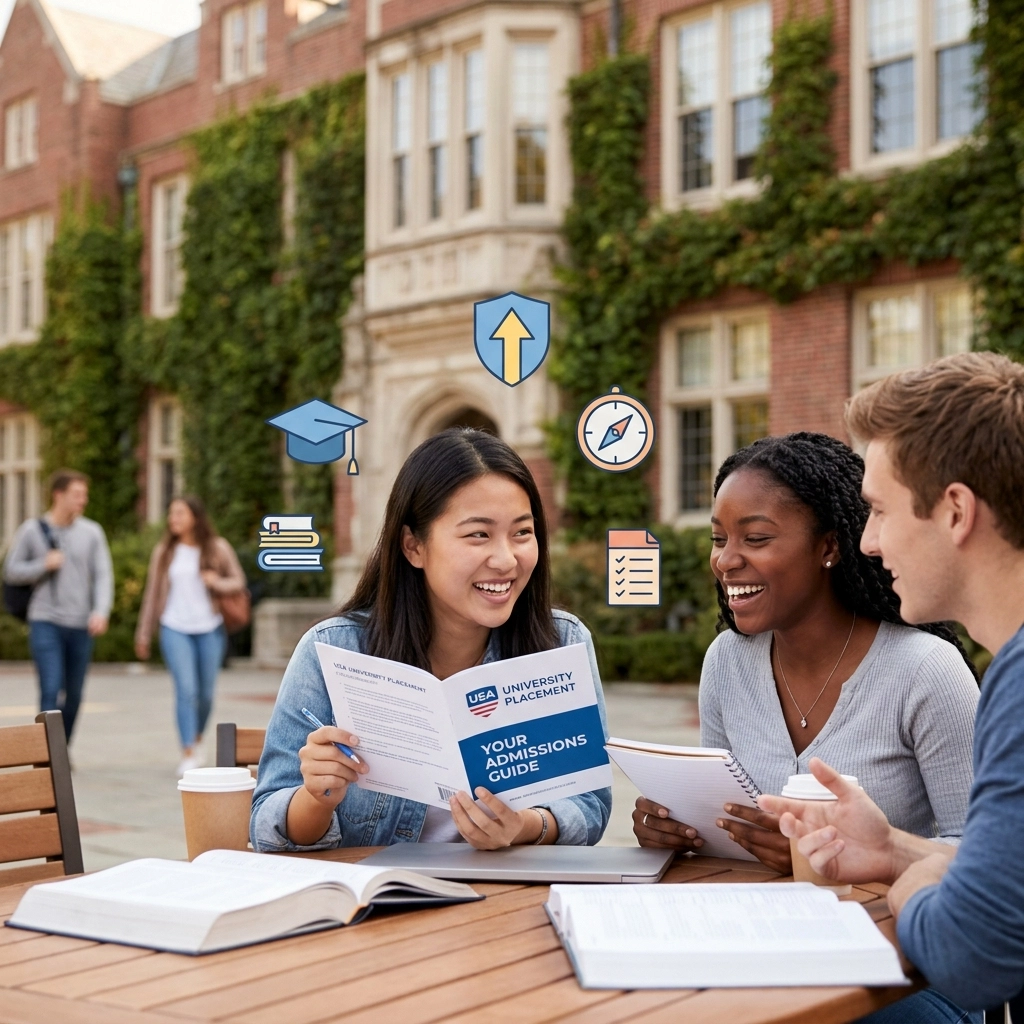
The Ultimate Guide to USA University Placement: Everything You Need to Succeed
Monrovia, Liberia
USA university placement is defined as the strategic process of identifying, applying to, and securing admission at an institution of higher education within the United States. This pathway is a multi-step journey that requires careful planning, academic rigor, and a thorough understanding of the American educational landscape. For international students, successful USA university placement serves as the foundation for global career opportunities and long-term academic transformation.
Securing a position at a competitive university involves more than just submitting an application form. It requires a holistic demonstration of a student's academic abilities, personal character, and future potential. This guide provides a comprehensive overview of the essential requirements and strategies necessary to navigate the USA university placement process effectively.
Understanding the US Higher Education Landscape
The United States offers a decentralized and diverse education system, housing thousands of colleges and universities. When a student chooses to study in USA, they must distinguish between research universities, liberal arts colleges, and community colleges. Each type of institution serves different academic goals and offers varied environments for student growth.
Admissions departments in the United States typically employ a holistic review process. This means that while academic performance is paramount, officers also consider extracurricular activities, leadership roles, and personal essays. Understanding this philosophy is the first step toward achieving a successful USA university placement.

Academic Preparation and Rigor
The most critical factor in the USA university placement cycle is a student’s academic record. Admissions committees examine the Grade Point Average (GPA) and the difficulty of the courses taken throughout high school. To be competitive, students should pursue the most challenging curriculum available to them, such as Advanced Placement (AP) or International Baccalaureate (IB) courses.
For students in West Africa, the transition from local curricula to the US system can be complex. Educlive provides specialized pathways, such as the WASSCE to U.S. University requirements guide, to help bridge this gap. Demonstrating academic readiness through an Accelerated High School Diploma can significantly enhance a student's profile during the USA university placement process.
The Role of Credential Evaluation Services
International students must often convert their local grades and diplomas into the US grading scale. This is where credential evaluation services become indispensable. These services provide an objective assessment of international transcripts, ensuring that US universities can accurately interpret a student's academic standing.
Using recognized credential evaluation services ensures that your hard-earned grades are properly credited. Most universities require these evaluations to verify that a student has completed the equivalent of a US high school education. Without this step, the USA university placement process may be delayed or hindered by administrative discrepancies.
Standardized Testing Requirements
Standardized tests, such as the SAT or ACT, have traditionally been a staple of the USA university placement process. While some institutions have adopted "test-optional" policies, high scores on these exams remain a powerful way to demonstrate academic competency. These scores provide a standardized metric for comparing students from different educational backgrounds worldwide.
In addition to academic testing, students from non-English speaking countries must prove their language proficiency. Scores from the TOEFL or IELTS are standard admission requirements for those looking to study in USA. Achieving high marks in these areas is a prerequisite for any student aiming for a top-tier USA university placement.

Building a Strategic University List
A successful USA university placement depends heavily on the "best fit" philosophy. Rather than applying only to high-ranking institutions, students should create a balanced list of schools. This list should include "Reach," "Target," and "Safety" schools based on the student's academic profile and financial needs.
- Reach Schools: Institutions where the student's statistics are slightly below the average of admitted students.
- Target Schools: Institutions where the student's profile aligns perfectly with the typical admitted class.
- Safety Schools: Institutions where the student’s profile exceeds the average, making admission highly likely.
Researching the culture, location, and available majors of each school is vital. A strategic approach to list-building increases the probability of securing a favorable USA university placement that aligns with the student's long-term career goals.
Navigating the Application Timeline
The timeline for USA university placement begins approximately 12 to 18 months before the intended start date. Students must track various deadlines, including Early Decision, Early Action, and Regular Decision. Missing a deadline can result in a lost opportunity for the entire academic year.
- Preparation Phase (18 months out): Research schools and begin standardized test preparation.
- Examination Phase (12 months out): Sit for the SAT, ACT, and English proficiency exams.
- Application Phase (10 months out): Draft personal statements and request credential evaluation services.
- Submission Phase (8 months out): Submit applications through platforms like the Common App.
- Decision Phase (4 months out): Review admission offers and financial aid packages.
Financial Planning and Scholarships
The cost of higher education is a significant consideration for anyone planning to study in USA. Students must investigate tuition rates, room and board, and mandatory insurance costs. Fortunately, many institutions offer financial aid and merit-based scholarships to international applicants.
Securing a USA university placement often involves demonstrating financial eligibility for a student visa. For student-athletes, there are specific pathways such as how to get a sports scholarship in the US from Africa. Early financial planning ensures that a student can afford to enroll once they receive their acceptance letter.

The Personal Statement and Recommendations
The personal statement is a student's opportunity to speak directly to the admissions committee. It should reflect personal growth, unique experiences, and the specific reasons for pursuing a USA university placement. A well-written essay can often compensate for slight weaknesses in other areas of the application.
Letters of recommendation are equally important. These documents should be written by teachers or counselors who can attest to the student's character and academic potential. These testimonials provide a professional endorsement that strengthens the overall USA university placement portfolio.
Navigating the F-1 Student Visa Process
Once a student secures a USA university placement, they must obtain an F-1 student visa. The university will issue a Form I-20, which the student uses to apply for a visa at the nearest US embassy or consulate. This process requires an interview where the student must demonstrate their intent to study and their ability to fund their education.
The visa interview is a formal procedure that requires precise documentation. Students must present their passport, I-20 form, financial statements, and evidence of their USA university placement. Proper preparation for this interview is the final hurdle before beginning an academic journey in the United States.
How Educlive Supports Your Journey
Educlive is dedicated to transforming academic access for students seeking a USA university placement. By providing structured pathways and essential resources, we help students navigate the complexities of the US application process. Whether you need assistance with an Accelerated High School Diploma Completion or understanding the nuances of international admissions, our platform is designed to support your goals.
Our mission is to bridge the gap between local achievement and global opportunity. We invite students to explore our resources and take the first step toward a successful USA university placement. To learn more about our commitment to education, visit our About Us page.

Summary of Success Factors
Achieving a high-quality USA university placement requires a combination of academic excellence and strategic execution. By following a structured timeline and utilizing professional resources, international students can successfully transition to the American higher education system.
- Maintain a high GPA and seek rigorous coursework.
- Utilize professional credential evaluation services for all international transcripts.
- Prepare thoroughly for standardized tests and English proficiency exams.
- Apply to a balanced list of universities that offer the "best fit."
- Secure financial resources or scholarships early in the process.
The path to USA university placement is demanding, but the rewards of a global education are unparalleled. With the right preparation and guidance, any dedicated student can achieve their dream to study in USA. For more information on starting your academic transformation, visit Educlive today.